How to Take Care of An American Bully: Expert Guide to Health, Training & Nutrition

⚠️ Veterinary Disclaimer
As breeders, we love sharing our daily experience, training tips, and care guides on the American Bullies Home blog. However, our content is strictly for general informational purposes and does not replace professional veterinary advice. Always talk to your vet regarding your dog’s health, diet, or medical needs.
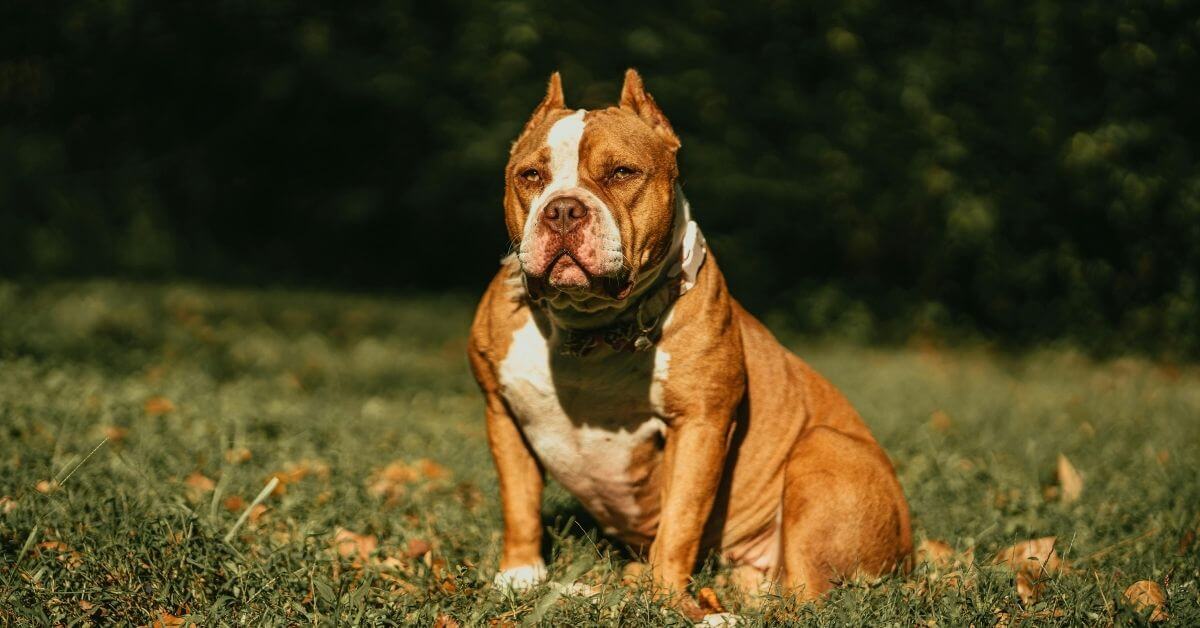
American Bullies are one of the most sought-after canine friends among the dog lovers in the world. Their powerful appearance and remarkably stable temperament make them excellent family pets. Though many people are impressed by their muscular structure, experienced owners know that an American Bully maintenance needs go far beyond basic care. Proper development depends on structured nutrition, controlled physical activity, disciplined training, and consistent health management.
Caring for an American Bully is not complicated, but it must be done correctly. If you can handle it with precision and consistent training methods, this breed will develop into a physically strong, mentally stable, and deeply loyal companion.
- Why Standard Dog Care is Not Enough
- Taking Care of An American Bully: All Requirements
- Nutrition Management: without Creating Health Risks
- American Bully Grooming Needs
- Exercise: Controlled Development Over Exhaustion
- Training and Socialization
- Common American Bully Health Problems
- Living Environment: Stability and Human Connection
- Raising a Puppy: Building the Future Dog
- Special Care Insights from Experienced Owners
- Frequently Asked Questions:
Why Standard Dog Care is Not Enough
The American Bully is not a generic dog breed that thrives on basic care alone. Its compact muscle structure, short coat, and strong human attachment require a more deliberate approach.
The breed develops body weight at a fast rate because of its physiological characteristics, which require strict dietary management. The breed shows an increased risk of skin sensitivities because its short coat offers only limited defense against environmental skin irritants. Behaviorally, the breed is highly people-oriented, meaning emotional neglect can have noticeable consequences.
Recognizing these traits is critical. Without this foundation, even well-intentioned care can produce poor results.
Taking Care of An American Bully: All Requirements
Nutrition Management: without Creating Health Risks
The fundamental element of American Bully care is proper nutrition. These dogs require to consume premium food to support their substantial muscle mass and maintain the integrity of their heavy skeletal structure.
Right American Bully Diet
Avoid filler grains which include corn, soy and wheat. Look for high-quality dog food which lists identifiable meats (e.g., deboned chicken, beef, or lamb) as their primary three ingredients. The majority of Bully owners believe in the Raw Food Diet (BARF) but they must conduct extensive research to determine the correct calcium-to-phosphorus ratio.
“The American Bully requires a diet dense in high-quality animal proteins and balanced with the correct calcium-to-phosphorus ratio to support their heavy, muscular frames without stressing their developing joints.” — Dr. Sarah D’Amelio, DVM, South Point Pet Hospital
Protein and Fat Ratios
For maintaining an ideal American Bully diet, owners need to offer a protein content of 25-30% and fat content of 15-20%. During the puppy development stage, they may need slightly higher protein to support the rapid muscle development.
Special Tips for Feeding:
- Slow Feeders: Bullies are notorious to inhale their food, which can lead to a life-threatening condition called Bloat (Gastric Dilatation-Volvulus or GDV). Use a slow-feed bowl to help them control their eating speed.
- Supplements: Consider adding Omega-3 fatty acids (fish oil) for skin health and Glucosamine/Chondroitin for joint support early in life.
American Bully Grooming Needs
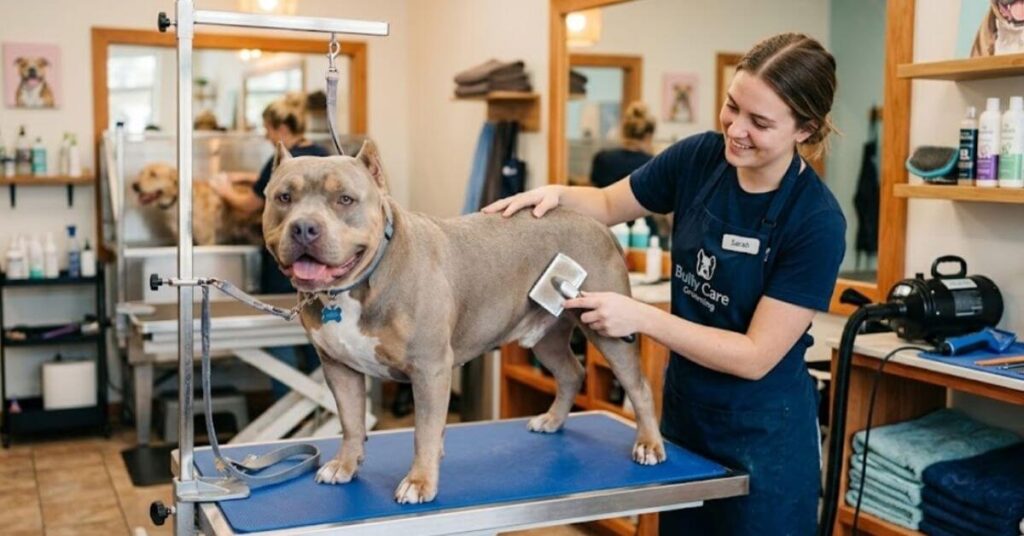
Though American Bullies have short coats, they are not “maintenance-free.”
Skin and Coat Care
Bullies are prone to skin allergies and dermatitis.
- Brushing: Use a rubber curry brush once a week to distribute natural skin oils and remove the dead hair.
- Bathing: Do not over-bathe. once in every 4-6 weeks is enough unless they’ve rolled in particularly messy. Use an oatmeal-based or hypoallergenic shampoo to avoid stripping the skin of essential oils.
Managing the Folds
If your Bully has facial wrinkles around the snout, these must be cleaned daily. The folds of the skin can trap moisture and bacteria which can result in infections and “yeasty” odors. You can use a damp cloth to clean the areas first followed by a dry cloth for final cleaning to ensure they are completely dry.
Nail Maintenance
Because of their weight, long nails can lead to toe splaying which creates excessive stress on the joints. Their nails become too long when you can hear them clicking on the floor. You should schedule a trim or grind every 2-3 weeks.

Exercise: Controlled Development Over Exhaustion
Successful American Bully exercise depends on two main factors such as exercise control and consistency. The breed needs daily exercise to keep its muscles toned and mentally stable, but it does not need extreme exercise routines.
Walking with an organized pattern together with weight training activities shows better results than excessive running. Young dogs who experience excessive physical activity can result in joint development problems. The goal is to build a strong, functional body not simply tire the dog out.
Environmental awareness holds equal value. American Bullies experience higher heat sensitivity than most dog breeds because of their body composition. Exercise routine should be changed in the hot summer seasons to prevent them from overheating and stress.
Training and Socialization
A 70-pound dog with a “scary” look needs to be the best-behaved dog on the block to combat stigma.
Early Socialization
The “window of socialization” closes at 16 weeks. You should help your Bully puppy experience all available sights, sounds and different people. This includes umbrellas, sirens, children, and people wearing hats.
Positive Reinforcement
The American Bully dog breed has a desire to satisfy others. First, train them to understand the simple words like “come here” and “sit down”. Give them high-value treats when they follow your instruction. Don’t punish them for following your command. It can discourage them and damage their confidence.
The training process should exclude all “alpha roll” methods because those methods create aggression problems through fear. Instead, focus on Lure-Reward training methods to gently guide their heavy bodies into positions like sit, stay, and down.
Leash Manners
Because they are incredibly strong, “pulling” is not an option. Start leash training the day you bring them home. Use a front-clip harness or a head halter if they are particularly strong pullers, but the goal should always be a loose-lead walk.
Fun Activities for American Bullies
- Flirt pole sessions
- Low-impact hiking
- Nose work and scent games
- Hydrotherapy and swimming
- Spring pole tug-of-war
- Interactive puzzle toys
- Light weight pulling (adults only)
- Urban mushing or carting
- Obedience rally training
- Cavaletti pole exercises
Common American Bully Health Problems
Though American Bullies are healthy dogs. They are prone to certain health issues like any other dogs. Their health issues are:
- Hip and Elbow Dysplasia: Occurs frequently in breeds that have heavy-set body types. The weakness of their joints increases when they gain excessive weight.
- Cherry Eye: The third eyelid gland experiences a prolapsed condition. It looks like a red fleshy mass in the corner of the eye.
- Heart Issues: Some lines are prone to Congenital Heart Disease..
- Allergies: Bullies often suffer from environmental allergies (grass, pollen) or food allergies.
Prevention and Care
To prevent dysplasia, offer them a balanced diet and regular exercise to maintain their weight. If you notice any red fleshy mass in the corner of the eye, it immediately needs a basic surgical procedure for resolution. Regular veterinary checkups including heart murmur assessment is mandatory to prevent any heat failure. If your dog constantly licks their paws and develops red ears you should ask your vet about the proper treatment which includes either a redirected diet or Cytopoint/Apoquel medications.
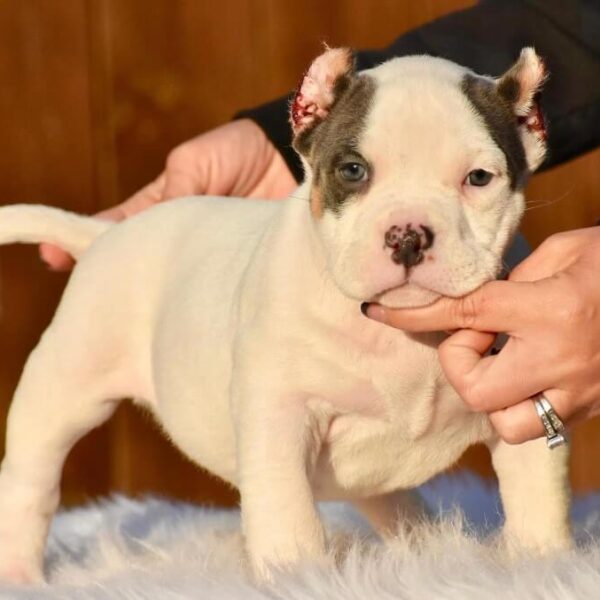
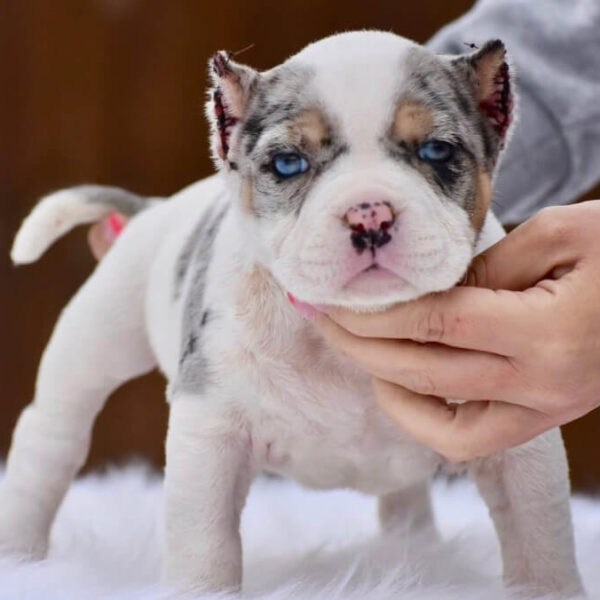
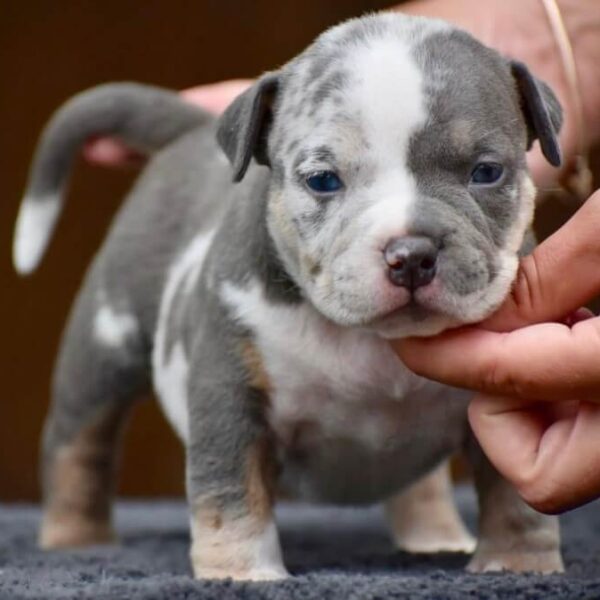
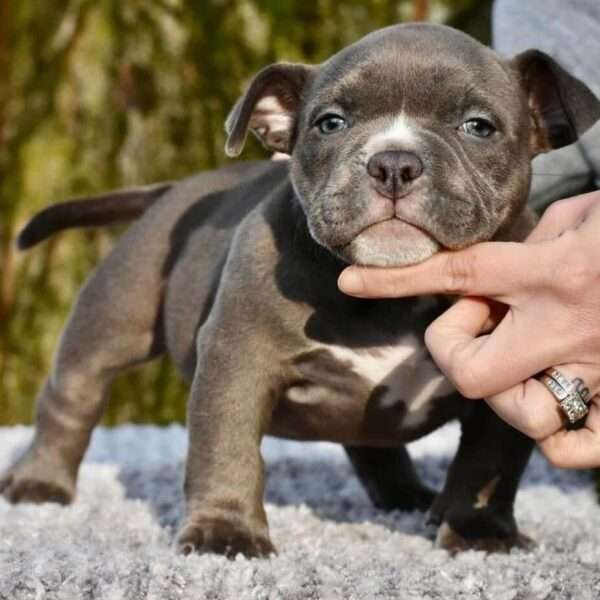
Some Healthy American Bully puppies at American Bullies Home:
Living Environment: Stability and Human Connection
The American Bully thrives in a stable, structured environment where it feels connected to its owner. This breed is highly people-oriented and does not respond well to isolation or neglect.
The combination of a clean indoor space together with a proper rest area and their daily routine provides them with a feeling of security. The breed demonstrates adaptability to various living environments yet requires emotional stability as its fundamental need.
Dogs that lack attention or structure develop behavioral problems which people mistakenly link to their natural temperament instead of their environmental conditions. The majority of issues arise from inconsistent training methods rather than problems specific to the dog breed itself.
Creating a “Bully-Proof” Home
Your home should be a sanctuary for your dog.
- Bedding: Because they are heavy, sleeping on hard floors can cause calluses on their elbows (hygromas). Provide orthopedic memory foam beds to protect their joints.
- Safety: Keep household cleaners and toxic foods (grapes, chocolate, xylitol) well out of reach. Bullies are tall and “counter-surfing” is a common hobby.
Raising a Puppy: Building the Future Dog
From an experience-based standpoint, the first year of a dog’s life is the most influential period. The stage establishes all three elements which include habits, physical structure and behavioral patterns.
Puppies that are raised with clear boundaries, proper nutrition, and early exposure to different environments tend to transition smoothly into adulthood. Conversely, a lack of structure during this phase often results in long-term challenges that are difficult to reverse.
During this period, responsible breeders and experienced owners prioritize consistent training, because they know that early training investments will lead to later training needs.
Special Care Insights from Experienced Owners
At a more advanced level, effective care becomes less about individual actions and more about consistency and observation. Small details—such as coat condition, posture, or energy levels—provide meaningful insight into the dog’s overall health.
Experienced handlers avoid unnecessary changes. The system becomes unstable when people make multiple changes to their diet, routine and training methods. The organization maintains its existing system while implementing slow and knowledgeable changes at required times.
This approach reflects a broader principle in canine care: stability produces reliability.
Frequently Asked Questions:
In Summary
The American Bully is a masterpiece of a companion dog. They offer the protection of a guardian with the soul of a lapdog. For taking care of an American Bully, focus on high-quality nutrition, moderate but consistent exercise, and early, positive socialization. It will help you to gain a companion that is not only a physical specimen but a behavioral role model.
Caring for them is a journey of mutual respect. They will give you their absolute loyalty; in return, they ask for a soft bed, a full bowl, and a place by your side. Treat them with kindness and structure, and you’ll find that the American Bully is not only a pet but also it’s a family member that completes the home.